
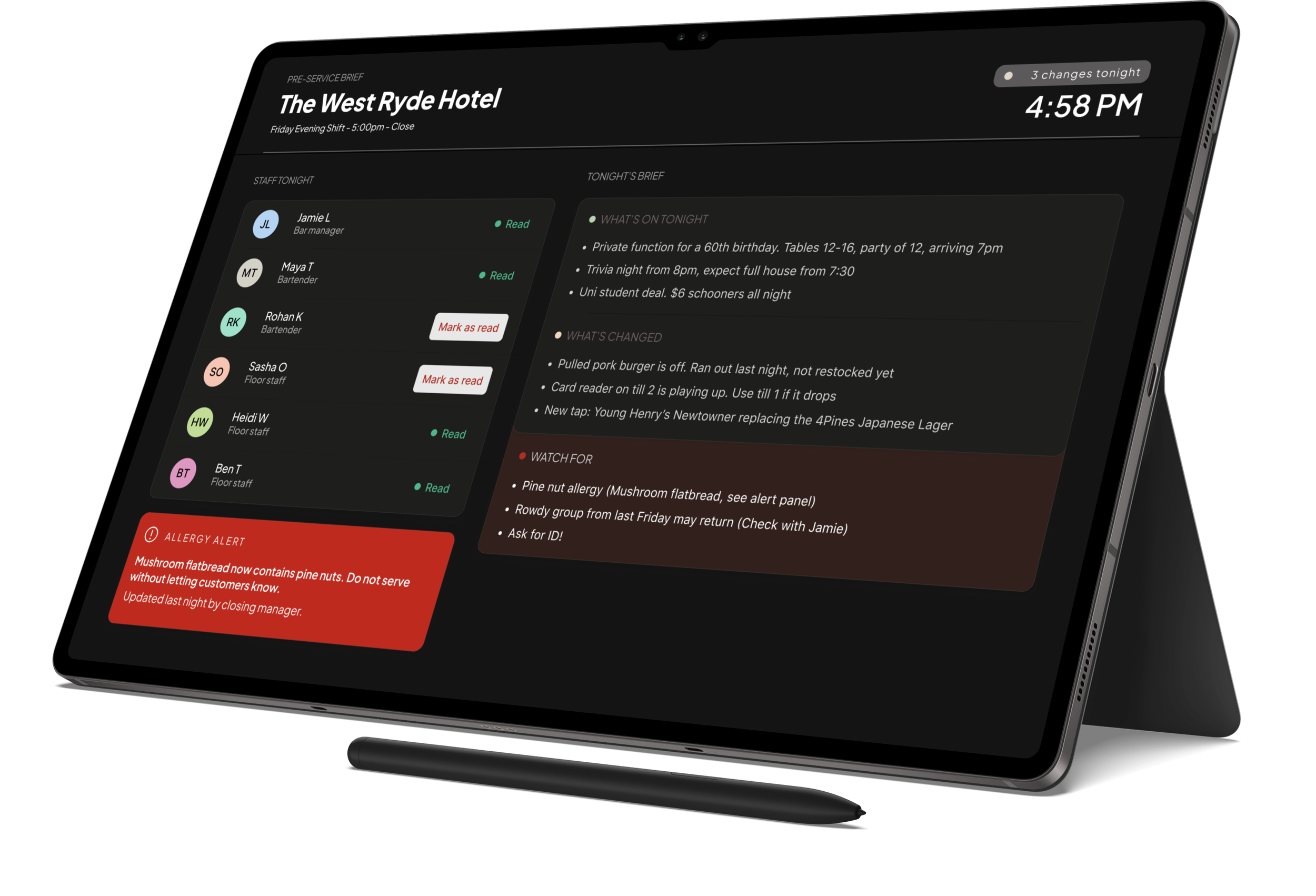
A speculative service design concept exploring how casual hospitality workers can get the right information before every shift, without relying on word of mouth
Service Design, UI / UX
Shift Brief
Team: Prue
MAY 2026
Problem
Casual hospitality workers clock on without context for their shift. Permanent staff absorb venue knowledge over time, but casuals arrive with no reliable way of knowing what changed last night, what to watch for, or what's on the menu this week. The information exists. It just doesn't reach them.
Research
I interviewed eight people, a mix of current and former casual hospitality workers, some recruited through my own network and some approached directly. I sat in on pre-service routines at two venues and asked workers to walk me through how they actually find out what they need to know before a shift.
The same pattern kept coming up. Critical updates moved through permanent staff verbally and rarely reached casuals reliably. Workers described regularly finding out about allergy changes, menu updates or booking details mid-service, from a customer or after making a mistake.
Secondary research added context to what I was hearing. Casual workers make up a significant portion of the Australian hospitality workforce and have no access to sick leave, no guaranteed hours and no formal job security. Shifts can simply stop being offered with no explanation. Being kept out of the information loop sits within that same pattern. Casuals are structurally positioned as disposable, and the way information moves in most venues reflects that.
“I think they notice when we make mistakes, not why the mistakes happen.”
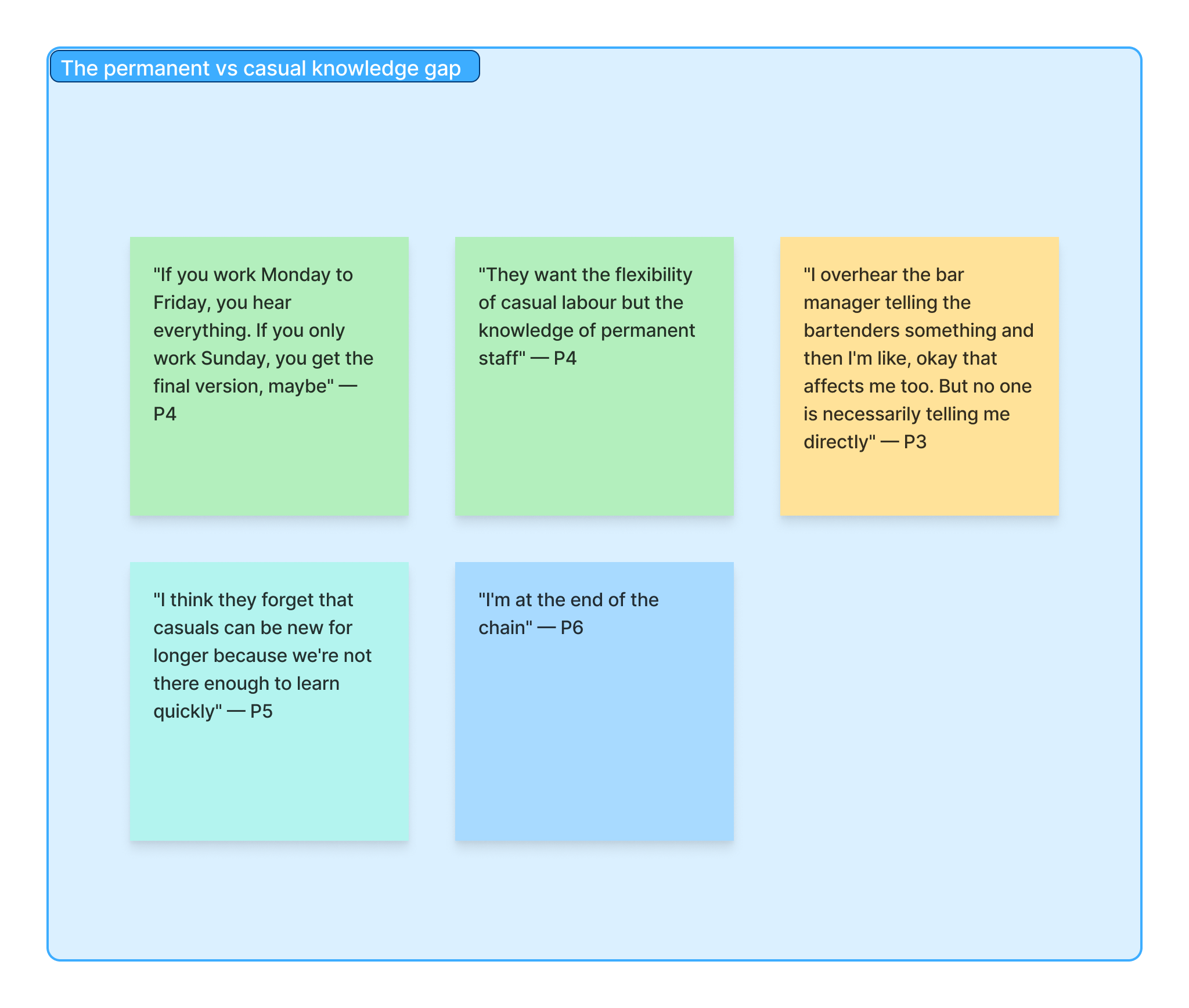
“I don’t think workers should have to monitor a chaotic group chat on their day off to be good at their job.”
“Treat shift information like part of the job, not extra homework”
Who I designed for
Two types of casual worker came out of the research. The experienced casual who has figured out how to seek information out themselves, and the newer casual who doesn't yet know what they don't know. Both are underserved, just in different ways.




Where the problem sits
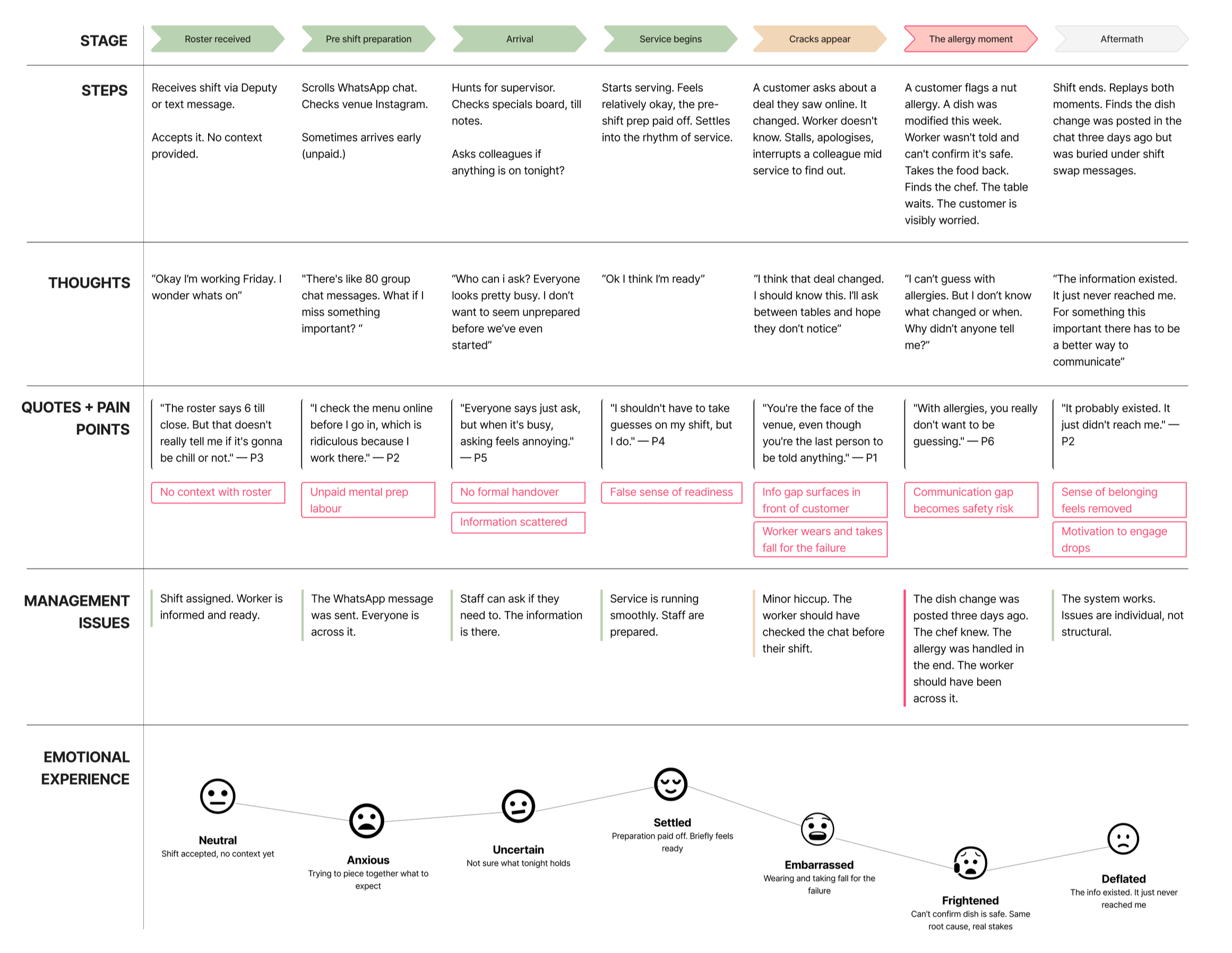
Mapping the shift journey showed two moments where the information gap hurts most. The hours before a shift when a worker is still at home, and the ten minutes between clocking on and service starting. Any solution needed to work in both.
The design direction
Shift Brief works across two touchpoints.
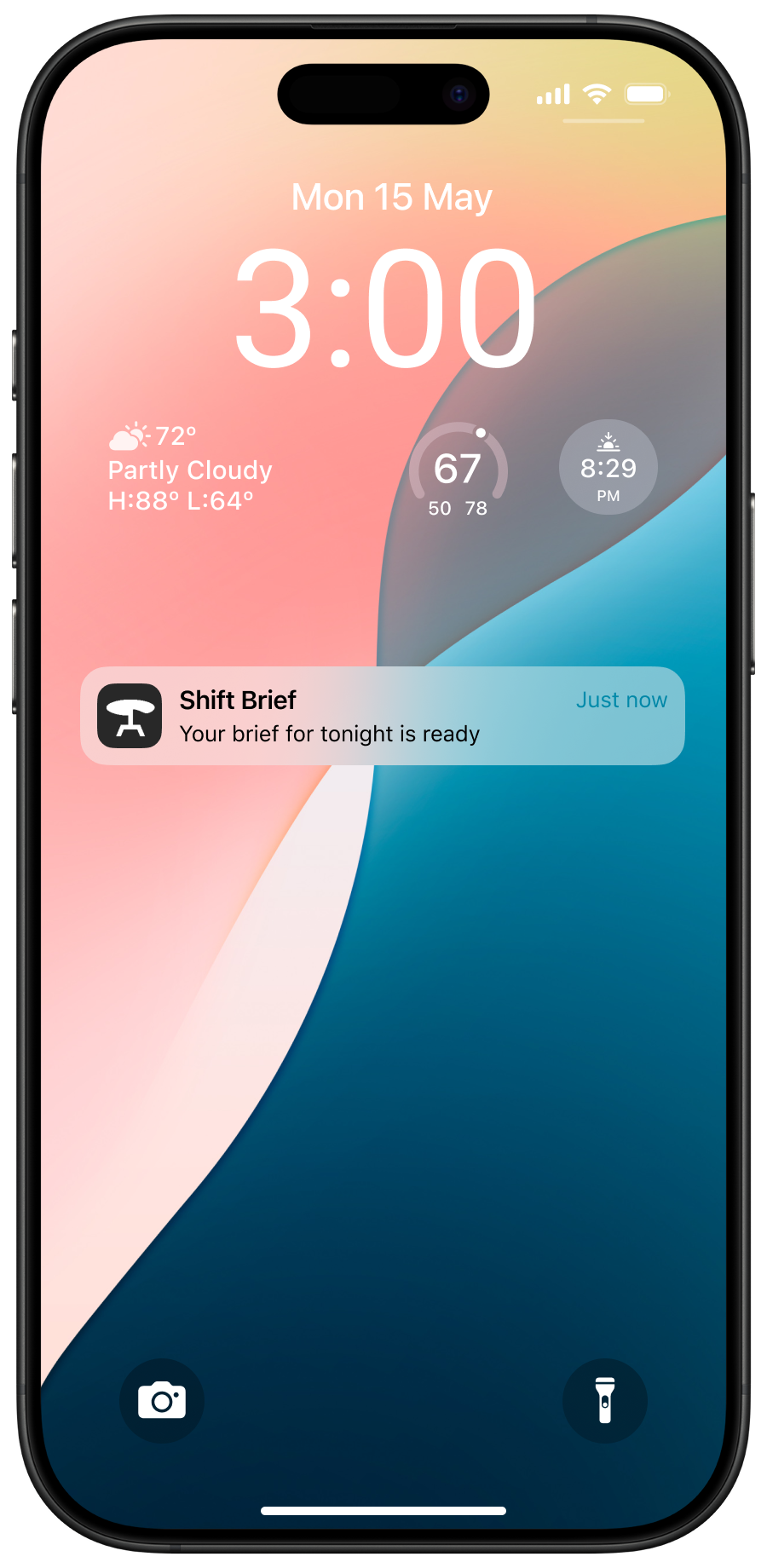
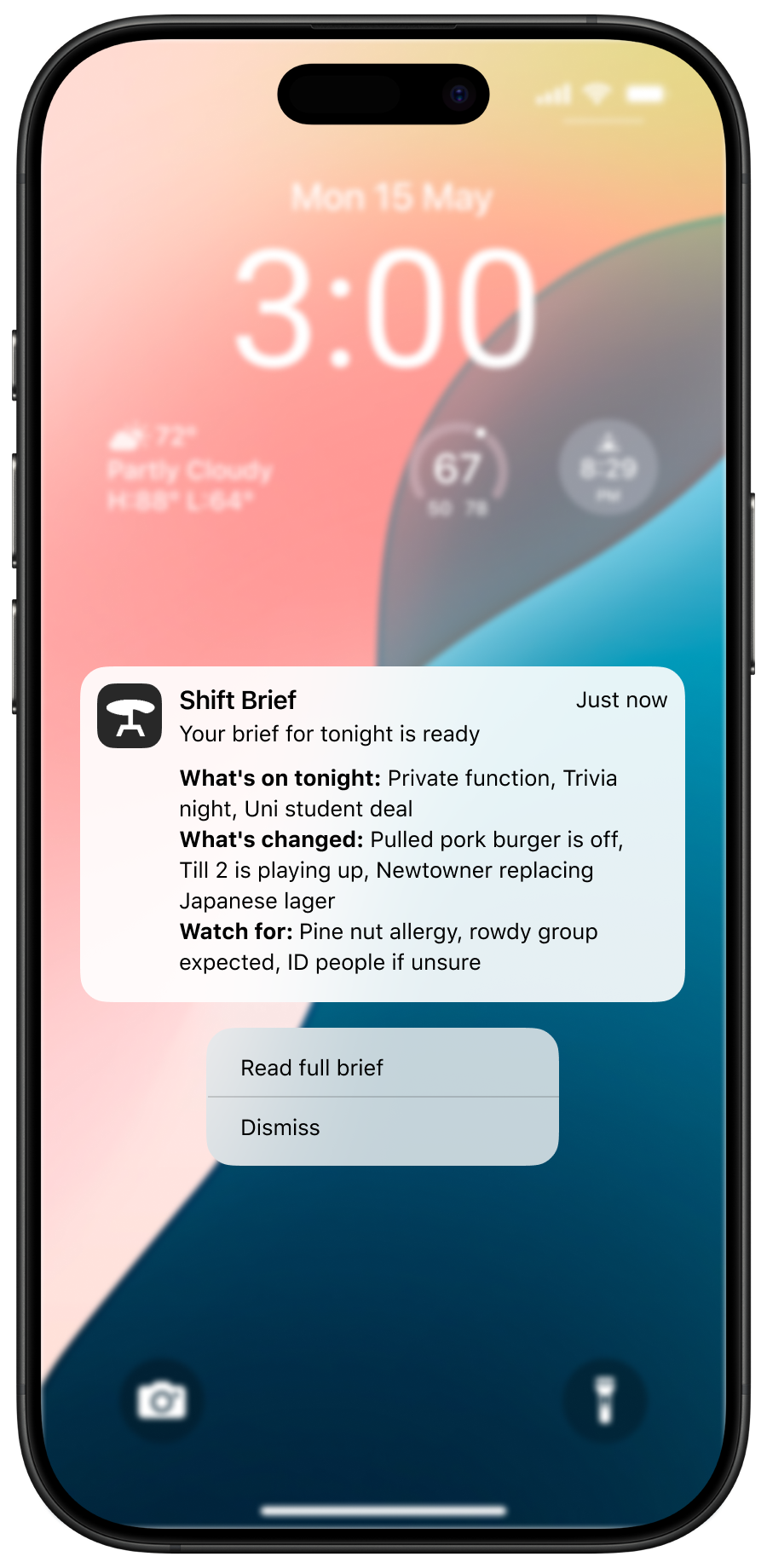
Two hours before each shift, workers get a push notification on their phone with a summary of what's on, what's changed, and what to watch for. Opening the notification marks them as having read the brief. No extra step needed.
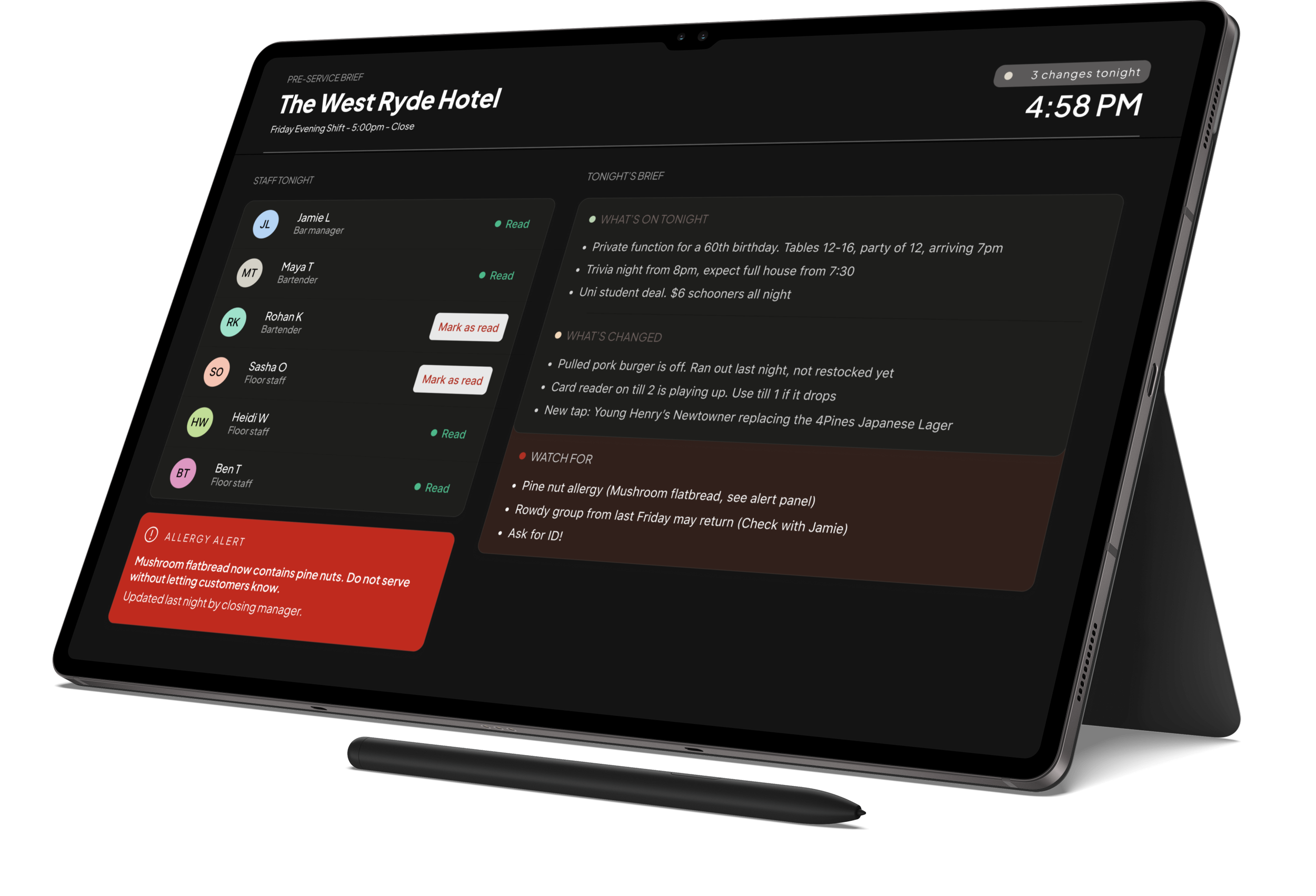
At the venue, a shared tablet in the staff area shows the full brief alongside a live read status for everyone on shift that night. A manager can see before service starts whether someone hasn't read it yet, and follow up.
This doesn’t ask anyone to do more
In most hospitality venues, the closing summary is already part of a manager's end of shift routine. They write a note or send an email covering what happened that night, the rush, the till discrepancy, a staff issue.
This concept doesn't ask managers to do more. It asks them to do the same thing slightly differently. A consistent template adds a few forward looking prompts alongside the nightly recap. What's on tomorrow. What's changed. What to watch for. The same five minutes, redistributed to the people who actually need it.

What’s next
A next step would be adding category tags to brief items so workers can scan for what's relevant to their role. A bartender cares about drink and equipment updates. Floor staff care about events and bookings. Connecting the system to rostering tools like Deputy or Tanda would also mean managers aren't maintaining a separate thing.